Engineering for production that cannot stand still.
We plan, automate, qualify and commission pharmaceutical and food plants. From field device through control system to server infrastructure, as one technical system. Engineering base near Munich, projects across Germany, Austria and Switzerland.
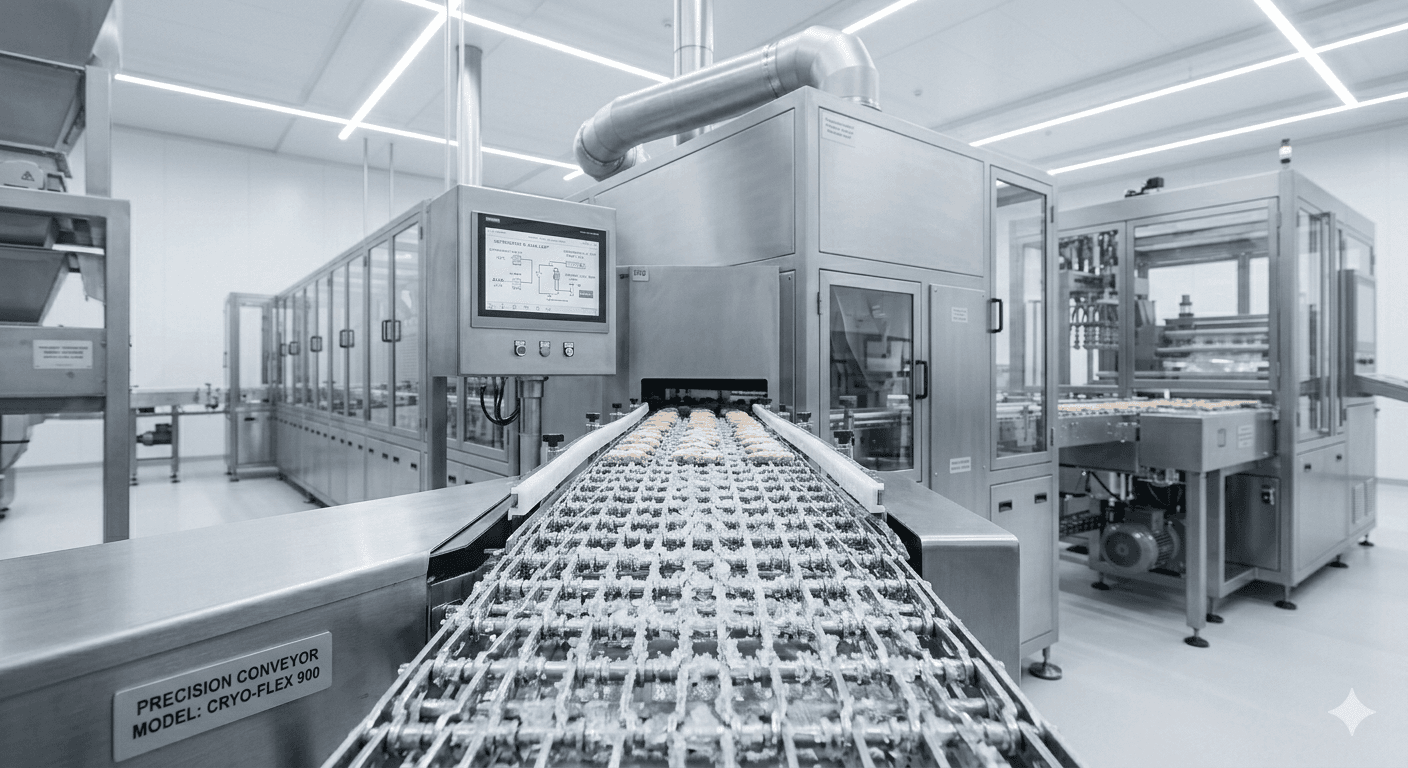
We are an engineering network for regulated production. We plan, automate, qualify and commission the plants that go on to make medicines and food. Whether a plant runs on schedule and in its specified state is decided in the collaboration between process engineering, automation, production IT and qualification. None of these disciplines gets a plant running on its own — which is exactly why we work across disciplines in one team.
In regulated production, a mistake costs batches, time and approvals. That is why every engineer owns their tests, their decisions and the documentation behind them.
A pharmaceutical or food plant only counts as finished once it is proven to meet its specification. We deliver that evidence across the whole chain: we support the design, automate plants and control systems, build the IT layer beneath them with servers, networks and interfaces to MES and ERP, carry out the commissioning and qualify to GMP.
For us, automation and IT are part of the plant and are planned together with the process. We also develop our own software platform for documenting plants, recording test evidence and analysing project data, with AI supporting the work inside it. The company is growing: we are filling several positions in all five fields in parallel. From Lead Engineer, the role includes people responsibility plus a share of proposals and project acquisition.
Four fields, one plant.
We join during design, with the automation concept and the IT architecture, and carry responsibility through to qualified handover.
Automating the whole plant and the IT beneath it
Roles:
- Control systems and PLCs: Siemens PCS 7 and S7, DeltaV, Rockwell
- Recipe control to ISA-88, sequences, alarm management
- OT/IT integration via OPC UA: MES, SCADA, historian, ERP interfaces
- Server infrastructure, virtualisation, network segmentation, backup, data integrity
- Data-driven analysis such as batch reports and trend evaluation
Roles: Junior Automation & IT Specialist · Automation & IT Engineer · Senior Automation & IT Engineer · Automation & IT Lead
Commissioning regulated production plants
Roles:
- Commissioning concepts and test plans during the design phase
- FAT and SAT, loop checks, functional testing
- Plant start-up, ramp-up, handover to production and qualification
- Coordinating trades, plant builders and client teams
Roles: Junior Commissioning Specialist · Commissioning Engineer · Senior Commissioning Engineer · Commissioning Lead
Qualification and computer system validation
Roles:
- DQ, IQ, OQ and PQ including test planning, execution and reporting
- Computer system validation to GAMP 5, data integrity to ALCOA+
- Risk analysis, change control, deviation management
- Interface to commissioning, automation and the client's QA
Roles: Junior Qualification Engineer · Qualification Engineer
Our own systems with digital verification
Roles:
- Lockout/tagout with RFID-based isolation verification
- Freeze and thaw systems with a documented temperature chain
- Development of the associated software and evidence records
Roles: No advertised opening at present — speculative applications welcome
Where you start and where it leads.
Junior Engineer and Engineer
You bring a completed apprenticeship, a Bachelor's or a Master's degree in a technical discipline — process engineering, chemical lab work, electrical engineering or software development, say; other backgrounds are welcome too — what counts is process understanding. You work on a project from day one: after your induction you take on your own work packages, then your own tests — guided by an experienced engineer throughout. We do not expect control-system experience when you join.
Senior Engineer and Lead Engineer
You own commissioning, automation or qualification packages independently and act as the technical contact for clients and trades. As a Lead, you add people responsibility, the field's methodology and a share of proposals and project acquisition.
Five levels. What you own at each stage.
| Level | Responsibility |
|---|---|
| Junior Engineer | Works within the project team and, after the induction, takes on clearly bounded work packages — in commissioning, automation or qualification — and then their own tests. Keeps documentation to GMP requirements and reports deviations to the responsible engineer. Continuously guided on the plant. |
| Engineer | Owns work packages from preparation through to acceptance: FAT and SAT, automation tasks, qualification protocols. Coordinates directly with plant builders and the client's departments. Spots deviations in the field, assesses them and proposes the correction. |
| Senior Engineer | Leads sub-projects — in automation, commissioning or qualification — and answers to the client for their technical outcome. Defines approach, test scope and risk assessment and defends both in client audits. Coordinates the trades involved and guides engineers technically. |
| Lead Engineer | Leads a team, plans assignments and develops the engineers professionally. Sets the field's standards and methodology and makes sure they carry across all projects. Helps price proposals and leads the technical conversations with clients. |
| Engineering Director | Owns a business area with its results, utilisation and hiring. Sets the technology roadmap and decides which capabilities we build up and which we buy in. Leads proposals at strategic level, develops key accounts and represents the area internally and externally. |
End to end, with our own software platform.
Process, automation and IT are planned together here, not one after the other. Whoever commissions a filling line also knows the control system, the MES connection and the network behind it.
Rather than buying in standard software, we build our project tools ourselves: the digital model of the plant, the test evidence and the analysis of project data. AI supports evaluation and documentation within them. You work with these tools from your first project day and help develop them.
In regulated production, traceability is what counts. That is why we use AI in our own tools and not in plant control: every test, every approval and every change remains traceable and owned by people.
The five fields are established and the company keeps growing: more than 50 specialists in the network, around 30 projects a year in pharmaceutical and food production — sterile and non-sterile plants alike. That is why we are filling several positions in all five fields in parallel. From Lead Engineer, the role includes people responsibility plus a share of proposals and project acquisition; from Engineering Director, key-account development too.
What you get with us.
4 role profiles.
These are profiles, not single vacancies: on the Junior and Engineer profiles we are filling several positions, because we are hiring in all five fields in parallel.
The adverts below are published in German — recruitment is conducted in German, and business-fluent German is a requirement for every role (see the FAQ).
Automation & Production IT
1 roleControl systems, MES/SCADA, servers and networks.
Commissioning & Start-up
1 rolePlanning, FAT/SAT, start-up, handover.
Internships
2 rolesGetting started while you study.
No profile that fits?
Field and salary depend on your profile. Tell us what you would like to work on.
How the process runs.
Four steps, two 45-minute conversations, no assessment centre. We respond to every application within 48 hours.
Application
A short message and your CV are enough; no cover letter needed. You hear back within 48 hours.
First conversation, 45 minutes
Personality, motivation and the way you work. We deliberately leave the technical side for later. Remote, no presentation, in both directions.
Technical interview, 45 minutes
With two engineers, on a technical case study: a production system with process, automation and IT connectivity. You explain how you would commission, qualify or automate it.
Offer and start
Terms, level and your first project steps. Here too, we get back to you within 48 hours.
What you might be wondering.
Which level fits me?
What counts is what you own independently — not the number of years in the job: your own work packages, leading sub-projects, guiding others technically. We agree the level together in the technical interview. If you sit between two levels, apply for the higher one. The ladder runs from Junior Engineer to Engineering Director.
Is each advert just one position?
No. The list shows role profiles, not single vacancies. On the Junior and Engineer profiles we are filling several positions, because we are hiring in all five fields in parallel.
What do you look for in the first conversation?
Personality, motivation and the way you work. Technical depth is deliberately left for the technical interview.
What does the technical case study look like?
One example: a filling line with PLC control under a process control system, whose batch data needs to reach the MES. We sketch the process, the controls and the interfaces, then walk through which steps are critical, how you would test the automation and how the data stays traceable. The emphasis follows your field. There is no model answer.
How do I prepare?
Bring two projects that show technical depth: your part, your decisions, what you would do differently today. As a junior, projects from your apprenticeship or degree count too. The case study needs no separate preparation.
What do you expect from a Junior, and from a Lead?
From a Junior, no control-system experience — a structured way of working and technical curiosity. GMP, GAMP 5 and control systems are things we train. From Seniors and Leads we expect them to set the approach, the risks and the recommendations to the client themselves, and to guide engineers technically.
What if I don't meet every requirement?
Apply anyway. The way you work and your willingness to learn weigh more with us than a fully met list of requirements. The nice-to-haves in the adverts are explicitly not a must.
Which systems will I work with?
Control systems and PLCs (Siemens PCS 7 and S7, DeltaV, Rockwell), the OT/IT layer above them (OPC UA, MES, SCADA, historian, servers and networks) and GMP documentation (DQ, IQ, OQ, PQ, CSV to GAMP 5, ALCOA+). For analysis and scripting we use Python, among other tools. Plus our own project platform for plant documentation and test evidence.
How forward-looking are automation and IT here?
Production IT is part of the plant here, not a downstream layer. We build our project tools ourselves, from the digital model of the plant through to the test evidence. Within these tools, AI supports evaluation and documentation. In plant control itself we deliberately use no AI — there, traceability counts. If you come from automation or IT, you help develop the tools.
Technical or leadership track?
Both sit on the same ladder. From Senior Engineer you guide others technically and lead sub-projects; from Lead Engineer you run a team with people responsibility plus a share of proposals and acquisition. We are explicitly looking for people who want to take on people responsibility.
Do I need to speak German?
Yes, at business-fluent level. Site work, trades and documentation all run in German. On top of that, fluent English for the international pharma project environment.
How much will I travel?
On average around 50 per cent, depending on the project. Project phases run on the client's site in Germany, Austria and Switzerland, typically several weeks at a stretch. Engineering phases take place in the office or remotely. Commissioning roles travel most, qualification and automation less. We clarify the actual share early in the process.
Can I apply for several profiles?
One message with your CV is enough. Name the fields that interest you in it. There is currently no advert for special hardware and LOTO — for that field, apply speculatively.
How quickly will I hear from you?
Within 48 hours, in every case and after every step. That includes rejections. Decisions are made in the team, not in a round that next meets a month from now.
What is the induction like?
You start in a live project, not in a training loop. An experienced engineer guides you technically, and we agree your first project steps as part of the offer. On top come training in GMP, GAMP 5, control systems and our own tools. You take on your own tasks as soon as your induction in that area is complete.